
Where Flight Simulation Enthusiasts Gather from Around the World!
AVSIM Library - Search Results

| Category: Flight Simulator 2004 - AI Flight Plans | |
| BA Cityflyer Summer 2014 including Repaints |

|
Images related to this file:
File Description:

These are the complete Summer 2014 flight plans for BA Cityflyer.
I have used the actual real-world rotations and flight times for the week 6-12 April 2014, meaning that you also get real-world delays and cancellations. The beginning of the summer schedule has been a bit of a delightful mess, with as many as five wet leased aircraft operating. I have invented a couple of positioning flights to make it all work in a one-week pattern.
Given the many wet leases, you'll need three new repaints which I include, created for the occasion: WDL Aviation BAe 146-300; Cello Aviation Avro RJ85; and Eastern Airways Saab 2000, white with BA titles. The 146 and RJ85 use Fernando Martinez' models, and the Saab 2000 uses The Fruit Stand model.
BA Cityflyer uses alphanumeric callsigns which we are not able to reproduce in Flight Simulator, so I have used the commercial flight numbers throughout. Enjoy!
| Filename: | BA_Cityflyer_Summer_2014_including_Repaints.zip |
| License: | Freeware |
| Added: | 19th April 2014, 14:07:48 |
| Downloads: | 804 |
| Author: | Alexander Michael |
| Size: | 809.92 KB |
| Category: Flight Simulator 2004 - Aircraft Repaints, Textures and Modifications | |
| Iran Air (circa 1962) default Douglas DC3 |
|
File Description:
This is a repaint of the FS2004 default DC3 in the Iran Air early days livery. Iran Air came about in 1962, after Iranian Airways and Persian Air Services were joined together, taking the name of Iran National Airlines (internationally known as Iran Air). Iranian Airways had been the first Iranian flag carrier, when it was formed in 1944.
In a few years, with a fleet of 17 mostly DC-3 aircraft, Iran Air had both domestic and international routes covering many major Middle East cities.It soon built a large route map consisting of flights all over the Middle East, to Northern Africa, Europe and New York, and including a dense domestic flight schedule.
The first planes used by the company were the Avro York, DC-3, DC-6 and Vickers Viscount types.
Since I only had two very small B&W (or rather Brown and Yellow!) photos of IR DC3's, I've done my best to make the repaint look
as real as possible, hope that you'll like it.
| Filename: | Iran_Air_circa_1962_default_Douglas_DC3.zip |
| License: | Freeware |
| Added: | 30th January 2004, 13:55:37 |
| Downloads: | 918 |
| Author: | Pantee Farhangi / Microsoft |
| Size: | 431.77 KB |
| Category: Flight Simulator X - Scenery | |
| X2AD - RAF Aston Down - Gloucestershire, England |
|
File Description:
Former RAF Aston Down (IACO X2AD) is located 2.5 miles (4.0 km) east of Minchinhampton, Gloucestershire, South West England and 6.9 miles (11.1 km) west of Cirencester, Gloucestershire.
The airfield was originally opened as RAF Minchinhampton and was first used in the First World War, serving as an aerodrome for the Australian Flying Corps with No. 2 Squadron AFC flying the Royal Aircraft Factory S.E.5a and the Sopwith Pup and No. 3 Squadron AFC flying the Avro 504. The airfield closed shortly afterwards.
In 1938 the airfield reopened under the new name of RAF Aston Down at the request of the residents of Minchinhampton village, which lies about 1 mile (1.6 km) to the west of the airfield, who feared not enemy attack, but a fall in the value of their houses.
During the Second World War the main unit present was No. 20 Maintenance Unit RAF (MU) which stored and prepared aircraft. The unit arrived during October 1938 and left in September 1960.
The airfield was used by the Royal Air Force from the First World War until 1967 when the Cotswold Gliding Club moved in from their previous base near Tetbury.
| Filename: | X2AD__RAF_Aston_Down__Gloucestershire_England.zip |
| License: | Freeware |
| Added: | 3rd May 2016, 13:55:23 |
| Downloads: | 175 |
| Author: | Terry Boissel |
| Size: | 1.97 MB |
| Category: Flight Simulator 2004 - Aircraft Repaints, Textures and Modifications | |
| Starways Ltd, Douglas DC-3 |
|
Images related to this file:
File Description:
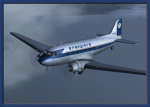
The airline was formed in 1948 to undertake freight and passenger charters from Liverpool (Speke) Airport. It also provided joyriding flights in a fleet of twin-engined Avro Anson aircraft. The airline acquired a number of Douglas DC-3s in the early fifties to operate seasonal tourist charters and built-up a network of scheduled services from Liverpool including flights to continental European destinations (Lourdes, Biarritz). In 1957 the airline purchased the larger four-engined Douglas DC-4 with another example purchased in 1958. The first DC-4 charter was flown on 8 January, 1958 between Liverpool and Southend with football supporters. In 1959 the airline introduced the turbo-prop Vickers Viscount aircraft for use on inclusive tour flights. In November 1963 Starways signed a co-operation agreement with British Eagle International Airlines. Operations continued unchanged though, running schedules from Liverpool to Glasgow and Heathrow. However, on 31st December 1963 Starways ceased operating and on 1st January 1964 British Eagle took over all the former Starways routes. The directors of Starways retained the aircraft and formed a separate company named Aviation Overhauls and then either sold or leased the aircraft to other operators. Requires the default Douglas DC-3.
| Filename: | Starways_Ltd_Douglas_DC3.zip |
| License: | Freeware |
| Added: | 22nd March 2011, 17:08:08 |
| Downloads: | 485 |
| Author: | John Payne |
| Size: | 3.91 MB |
| Category: Flight Simulator 2004 - Utilities | |
| Fuel and Payload Calculator B737NG and B757 ** Update ** |
|
Images related to this file:
File Description:
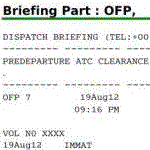
This file contains a spreadsheet template in OpenDocument format to prepare your flight ! Prepare your route, then, using planning tables and filling the fuel and weight form, prepare your payload estimation in this document. A copy of some tables (weights and limitations) for the B737 NG are embedded. A fuel calculator is also embbeded. It will provide automatic fuel load suggestion for each flight once you have completed your flight level and time of flight (based on linear interpolation of a real world flight planning table). Of course you can erase any suggestion with your own value. When it is done, go to the dispatcher briefing tab. Sign it to complete it automatically with some captain notes. In the end, export the dispatcher briefing as a selection in PDF if you wish. Fully reliable when used with your aircraft tables, this document uses the fuel planning methodology described in a PMDG manual and has been validated against a real B737-800 dispatcher briefing. The file contains two templates with automatic fuel load calculation (one for the 737NG, the other for the 757) and two templates without the linear interpolation module (for the Avro RJ and for the B727).
| Filename: | Fuel_and_Payload_Calculator_B737NG_and_B757__Updat.zip |
| License: | Freeware |
| Added: | 11th February 2013, 20:29:55 |
| Downloads: | 593 |
| Author: | Geoffrey Fernandez |
| Size: | 3.46 MB |
| Category: Flight Simulator X - Scenery | |
| GB-0112 - RAF Bassingbourn - Cambridgeshire, England |
|
File Description:
RAF Bassingbourn is a former Royal Air Force station located in Cambridgeshire approximately 3 mi (5 km) north of Royston, Hertfordshire and 11 mi (18 km) south west of Cambridge, Cambridgeshire, England.
RAF Bassingbourn was constructed by John Laing & Son between 1937 and 1939 in the parishes of Wendy and Bassingbourn immediately to the west of the A14 (now the A1198) road. The site selected was low ground between several tributaries of the River Cam. The area had been long cleared of forest and tended to be swampy and unstable, and because the boggy ground produced a persistent mist over the large meadow the site was considered ideal for airfield camouflage.
During the Second World War it served first as an RAF station and then as a bomber airfield of the Eighth Air Force, of the United States Army Air Forces (USAAF). It remains the home of the Tower Museum Bassingbourn. From 19 August 1942 to 25 June 1945, Bassingbourn served as headquarters for the 1st Combat Bombardment Wing of the 1st Bomb Division. It was assigned USAAF designation Station 121.
The RAF resumed occupation of Bassingbourn on 26 June 1945, the airfield was officially returned on 10 July 1945. The station became one of the main airfields for long-range transport aircraft. In 1948 and 1949 Avro York, Avro Lancaster and Douglas Dakota aircraft from the base took part in the Berlin Airlift, a massive operation transporting essential commodities to the beleaguered city.
In February 1952, RAF Bassingbourn received its first allocation of English Electric Canberra bombers and became the first jet bomber operational conversion unit (OCU) in the world. Canberras operated from Bassingbourn for 17 years and one of the aircraft is on static display in the Barracks. From 1963 to 1969 the Joint School of Photographic Interpretation was also located there.
On 29 August 1969, the last RAF Commanding Officer, Sqn Ldr A.M. McGregor MBE, turned over the station to the British Army as Bassingbourn Barracks.
The barracks were established, on the site of the former RAF Bassingbourn airfield, in January 1970, as the new Depot for the Queen's Division. The depot was responsible for training recruits undergoing their 19-week basic training before joining a regular battalion; in 1993 the Barracks were re-designated the home of the "Army Training Regiment, Bassingbourn" and remained as such for nearly 20 years. Bassingbourn Barracks closed as an army training location in August 2012.
The site was reopened for training Libyan soldiers in 2014 but closed down the same year.
Since approximately 1970 the site has retained its RAF links by being the home of 2484 (Bassingbourn) Squadron Air Training Corps.
| Filename: | GB0112__RAF_Bassingbourn__Cambridgeshire_England.zip |
| License: | Freeware |
| Added: | 30th May 2016, 11:01:25 |
| Downloads: | 321 |
| Author: | Terry Boissel |
| Size: | 1.58 MB |
| Category: Prepar3D V1-4 - Aircraft Repaints, Textures and Modifications | |
| Hunting Percival Sea Prince Belgian Air Force (RM-7) |
|
Images related to this file:
File Description:
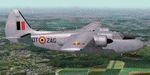
This folder contains a repaint for the Percival Sea Prince by Rob Richardson, in the colors of RM-7 of the Belgian Air Force, in the paintscheme it wore in its first year of service. In 1953 the Belgian Government ordered 12 Percival Pembroke's through Contract N° SP140 as a replacement for the ageing Avro Anson.The aircraft was used for short-range transport and liaison flights. Between 1956 and 1957 several brand-new Pembrokes were stored at Wevelgem awaiting a future detachment to the Belgian Congo, which eventually never materialised.
A number of Pembrokes were also used for the benefit of the Belgian National Geographical Institute that used the aerial photographs obtained with the Pembrokes to produce very detailed maps of the country. In 1978 the Pembrokes were struck of charge after their replacement, the Swearingen Merlin III became operational. All but two Pembrokes were sold to the rather dark company Air America (not to be confused with the CIA-supported Air America that was operational in South-East Asia), which was owned by a drugsdealer. After some very adventurous carreers in Souith America, several former Belgian Pembrokes were acquired and preserved in the USA. RM-7 is preserved in Belgium at Melsbroek air base by the Dakota Historical Center 15th Wing. Repaint by Jan Kees Blom, based on the paintkit by Rob Richardson.
| Filename: | Hunting_Percival_Sea_Prince_Belgian_Air_Force_RM7.zip |
| License: | Freeware |
| Added: | 5th August 2020, 19:14:00 |
| Downloads: | 44 |
| Author: | Jan Kees Blom |
| Size: | 7.83 MB |
| Category: Flight Simulator X - Scenery | |
| RAF Dunholme Lodge - Lincolnshire, England **UPDATE** |
|
File Description:
This is an-update to correct the location of the Tower, if you have installed my version uploaded on the 15 or 23 Oct 15
RAF Dunholme Lodge was a Royal Air Force station located between the parishes of Welton and Dunholme in Lincolnshire, England.
The grass airfield was first used by the Royal Air Force during 1941 and 1942 for use by Handley Page Hampden aircraft from nearby RAF Scampton, and was officially opened as a RAF Station in September 1942 as part of RAF Bomber Command with the building of three hard runways.
The main occupier of the station was 44 Squadron, with the Avro Lancaster four-engined heavy bomber, which moved in from RAF Waddington in May 1943 and stayed until it moved to RAF Spilsby in September 1944.
In November 1944 flying operations ceased due the proximity of other stations which did not allow night flying. At the end of the war 120 Lancaster's had been lost on operations from Dunholme Lodge.
From 1948 the site was host to motorcycle and car racing until 1959 when the base was reopened as an active RAF station when it became an active Bloodhound surface-to-air missile station with 141 Squadron. The Squadron in 1964 and the station finally closed in 1964. Source: Wikipedia.
| Filename: | RAF_Dunholme_Lodge__Lincolnshire_England_UPDATE.zip |
| License: | Freeware |
| Added: | 28th October 2015, 18:41:50 |
| Downloads: | 262 |
| Author: | Terry Boissel |
| Size: | 335.14 KB |
| Category: Flight Simulator 2004 - Utilities | |
| Servinfo Update 5(Nov 01, 2010) |
|
File Description:
Thank you for downloading this 5th update of Servinfo 2.02.
This update actualised with logos and data the following Airlines and Air Forces:Air Zimbabwe, Basler Flight Service, Bristow Helicopters, British International Helicopters,RAF Barkston Heath, Braniff International Airways, BQB LÃ�ÂÂneas A�©reas, China Northern Airlines,China Southern Airlines, Canadian Western Airlines, Centurion Air Cargo, Air Comores International,Dominicana de Aviaci�³n, DAS Air Cargo, Ecuatoriana De Aviaci�³n, Georgian National Airlines,Caribbean Star Airlines, Ghana International Airlines, Royal Tongan Airlines, Turkish Air Force,Ju-Air, RAF Leuchars, Albanian Airlines, South African Air Force, 32th Squadron RAF,USAF 100th Air Refuelling Wing, RAF(Support Helicopter Force),RAF Scampton, RAF St Athan,RAF Topcliffe Flying Training Unit, Vladivostok Air and RAF Valley Flying Training Unit.
The following aircrafts are now identified by Servinfo in all his flights:
Antonov An-2,Antonov An-8,Antonov An-12,Antonov An-22,Antonov An-24,Antonov An-26,Antonov An-28,Antonov An-30,Antonov An-32 Sutley/Firekiller,Antonov An-38,Antonov An-70,Antonov An-72,Antonov An-74-100/200, Antonov A124 Ruslan ,Antonov A140,Antonov A148,Antonov A225 Mriya,Antonov An-74-300,Avro Lancaster,Avro Lancastrian,Boeing B-17 Flying Fortress,Boeing B-29 Superfortress,Bristol Blenheim,B�¼cker B�¼ 131 Jungmann,B�¼cker B�¼ 131 Jungmeister,Consolidated B-24 Liberator,Curtiss P-40 Warhawk/Kittyhawk
Curtiss SNC-1 Falcon,De Havilland DH.98 Mosquito,Douglas AD Skyraider,
Douglas A-20 Havoc/Boston/P-70/DB-7,Douglas B-26 Invader,Douglas SBD Dauntless
Fairey Swordfish,Grumman F4F Wildcat,Grumman F6F Hellcat,Grumman F7F Tigercat,
Grumman F8F Bearcat,Grumman TBF Avenger,Grumman F9F Panther,Grumman S-2/S-2F Tracker,Grumman S-2 Turbo Tracker,Hawker Hurricane/Sea Hurricane, Hawker Fury-Sea Fury,Hawker Hunter,Hawker Hind,Heinkel He-111,Ilyushin A-50,Ilyushin IL-103,Ilyushin IL-114,Ilyushin IL-2M3,Ilyushin IL-4,Ilyushin IL-10,Ilyushin IL-12,Ilyushin IL-14,Ilyushin IL-18/IL-20/IL-22"Coot"/IL-22 Zebra/IL-24,Ilyushin IL-28,Ilyushin IL-38,Ilyushin IL-62,Ilyushin IL-76/IL-78/IL-82/IL-76 Gajaraj
Ilyushin IL-86/IL-87,Ilyushin IL-96,Kamov Ka-25 "Hormone",Kamov Ka-27"Helix"
Martin B-26B Marauder,Messerschmitt 109,Messerschmitt 262 Schwalbe,MiG-15,
MiG-17,MiG-19,MiG-21,MiG-25,MiG-27,MiG-29,MiG-31,Mitsubishi A6M Rei-Sen"Zero",
North American F-82 Twin Mustang,Northrop P-61 Black Widow,Vought F4U Corsair,
Short S-25 Sandringham,SIAI Marchetti SF.260,Sukhoi Su-7,Sukhoi Su-15,Sukhoi Su-17/Su-20/Su-22,Sukhoi Su-24,Sukhoi Su-25/Su-28/Su-39,Sukhoi Su-26,Sukhoi Su-29,Sukhoi Su-31,Sukhoi Su-38,Sukhoi Su-47 Berkut,Sukhoi Su-80,Sukhoi Superjet 100-95,Tupolev Tu-2,Tupolev Tu-4,Tupolev Tu-14,Tupolev Tu-16,Tupolev Tu-20/95/142,Tupolev Tu-22,Tupolev Tu-22M,Tupolev Tu-114,Tupolev Tu-124, Tupolev Tu-134,Tupolev Tu-144,Tupolev Tu-154,Tupolev Tu-160,Tupolev Tu-204/214/224/234,Tupolev Tu-334 and Vickers Supermarine Spitfire/SeaFire.
| Filename: | Servinfo_Update_5Nov_01_2010.zip |
| License: | Freeware |
| Added: | 2nd November 2010, 01:43:39 |
| Downloads: | 934 |
| Author: | Daniel Nole |
| Size: | 1.44 MB |
| Category: Flight Simulator X - Scenery | |
| RAF Tholthorpe |
|
File Description:
RAF Tholthorpe opened in the late 1930s as a grass airfield, and operated as a sub-station of RAF Linton-on-Ouse.
From August 1940 to December 1940, Tholthorpe was a landing field for Whitley bombers of No. 58 Squadron RAF and No. 51 Squadron RAF based at Linton. From January 1941 to June 1943, Tholthorpe underwent maintenance to upgrade to Class A standards, with three intersecting concrete runways.
RAF Tholthorpe was assigned to No. 6 Group RCAF in June 1943. RCAF squadrons stationed here included No. 434 Squadron "Bluenose", 431 Squadron "Iroquois", 420 Squadron "Snowy Owl", and 425 Squadron "Alouette".
No. 434 Squadron, flying Halifax bombers, was formed and headquartered at Tholthorpe airfield from June 1943 until the squadron was moved to Croft. In July 1943, 431 Squadron moved to Tholthorpe airfield from Burn. It was later moved to Croft airfield as well. Not only were the operational squadrons quartered here, also their service echelons, - respectively Nos. 9431 and 9434 Service Echelon - which were formed from the ground crew of nos. 431 and 434 Squadron on 3 November 1943 and who moved with their squadrons on to Croft in December 1943.
In December 1943 No. 420 and No. 425 Squadrons (together with their service echelons, nos. 9420 and 9425 Service Echelon were moved to Tholthorpe airfield from Dalton and Dishforth respectively. These squadrons had returned from service with Wellingtons in North Africa, and it took them several weeks to work up on the newly acquired Halifax bombers. They were therefore unable to fly their first raids from Tholthorpe until mid-February 1944.
No. 420 Squadron flew 160 operations from Tholthorpe airfield and lost 25 Halifax’s. No. 425 squadron flew 162 operations from Tholthorpe airfield and lost 28 Halifax’s. In all, 119 Halifax bombers were lost from Tholthorpe. In April and May 1945 nos. 420 and 425 Squadron converted to Avro Lancaster’s, which they took with them when they left for RCAF Debert, Nova Scotia, Canada in June 1945.
The station closed in June 1945.
| Filename: | RAF_Tholthorpe.zip |
| License: | Freeware |
| Added: | 9th May 2017, 20:41:48 |
| Downloads: | 138 |
| Author: | Terry Boissel |
| Size: | 4.63 MB |


© 2001-2026 AVSIM Online
All Rights Reserved
Privacy Policy |